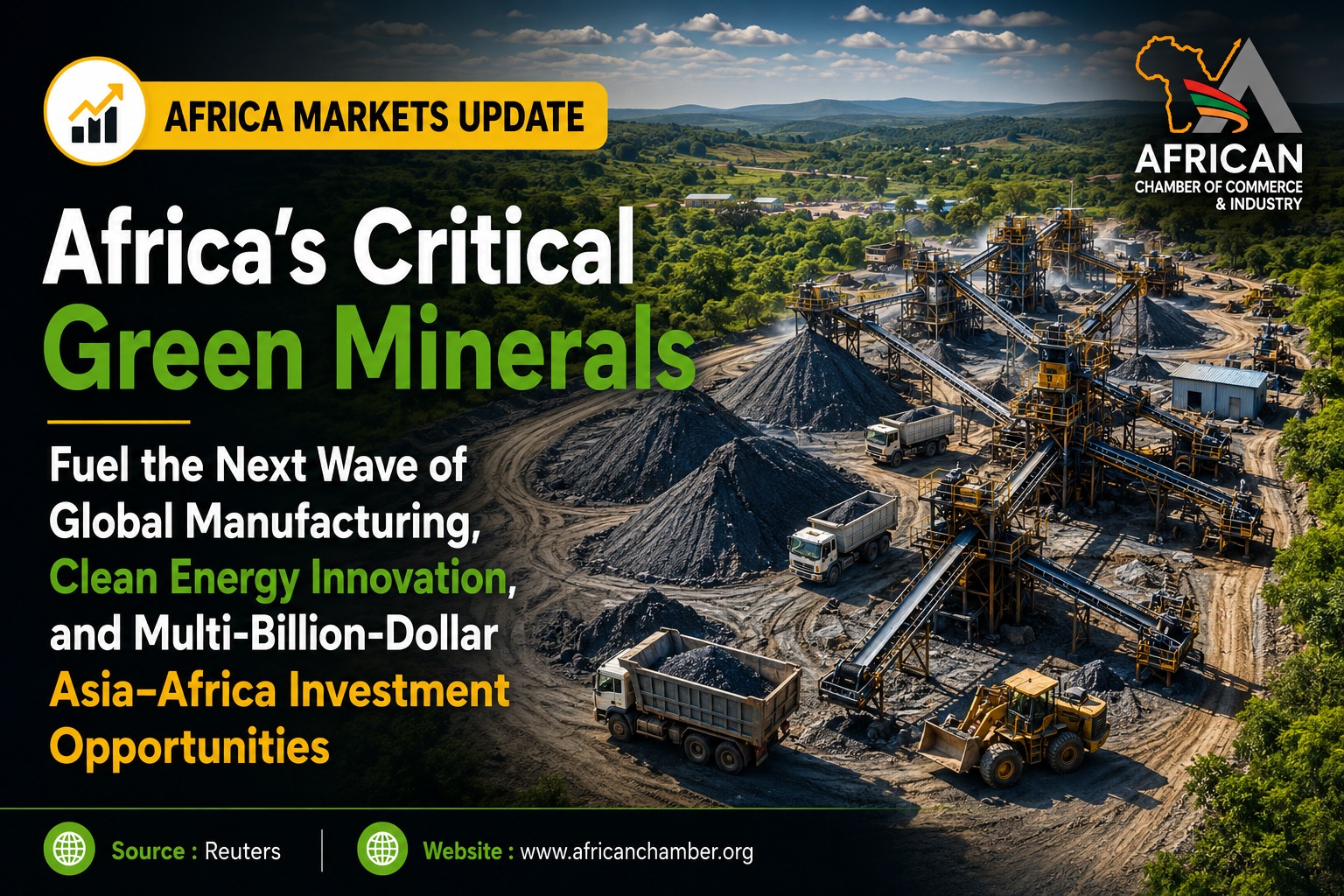
Africa is rapidly emerging as one of the world’s most strategic destinations for critical minerals, which are essential for electric vehicles (EVs), renewable energy systems, battery storage, semiconductors, and advanced manufacturing. Minerals such as lithium, uranium, rare earth elements, cobalt, manganese, graphite, and copper are becoming increasingly important as governments and industries accelerate the global transition toward clean energy and digital technologies.
In a significant development, Namibia and China signed eight new cooperation agreements covering green minerals, infrastructure, energy, agriculture, science and technology, and economic partnership. The agreements are designed to move beyond traditional resource extraction by promoting local mineral processing, industrial value addition, technology transfer, workforce development, and long-term investment.
Unlike traditional mining agreements that focus primarily on exporting raw materials, the new partnership aims to develop downstream industries within Africa. This approach will encourage the establishment of mineral processing plants, battery material production, engineering services, manufacturing facilities, and supporting industrial infrastructure, enabling African economies to capture greater value from their natural resources while creating skilled employment opportunities.
The agreements also strengthen cooperation in infrastructure development, including transport networks, energy systems, and industrial facilities that are essential for supporting large-scale mining and manufacturing operations. Enhanced collaboration in science, technology, education, and workforce training is expected to improve local capabilities and accelerate industrial modernization across key sectors.
Namibia is particularly well positioned to become a strategic industrial hub. The country possesses significant reserves of uranium, lithium, and rare earth elements, while recent offshore oil discoveries and growing renewable energy projects further enhance its attractiveness as an investment destination. China already accounts for approximately one-quarter of Namibia’s exports, with uranium representing the majority of those shipments, and Chinese companies have invested billions of dollars in Namibia’s mining sector.
For businesses, the growing demand for critical minerals presents opportunities well beyond mining. Companies involved in engineering, heavy machinery, logistics, renewable energy, battery manufacturing, environmental services, construction, digital technologies, and industrial automation can all benefit from expanding projects across the continent.